BartDay
  • Economy
    • Business
    • Politics
  • Cryptocurrency
  • Investing
    • Banking
    • Forex
    • Financial Services
  • Markets
    • Capital Markets
    • Emerging Markets
  • People
    • Consumer & Retail
    • Health
    • Opinion
  • Environment
    • Energy
    • Industrials
    • Manufacturing
  • Technology
    • Learning
    • Auto & Transportation
    • Data
    • Science
    • Telecommunications
  • Featured
  • About
  • Economy
    • Business
    • Politics
  • Cryptocurrency
  • Investing
    • Banking
    • Forex
    • Financial Services
  • Markets
    • Capital Markets
    • Emerging Markets
  • People
    • Consumer & Retail
    • Health
    • Opinion
  • Environment
    • Energy
    • Industrials
    • Manufacturing
  • Technology
    • Learning
    • Auto & Transportation
    • Data
    • Science
    • Telecommunications
  • Featured
  • About
BartDay
BartDay
  • Economy
    • Business
    • Politics
  • Cryptocurrency
  • Investing
    • Banking
    • Forex
    • Financial Services
  • Markets
    • Capital Markets
    • Emerging Markets
  • People
    • Consumer & Retail
    • Health
    • Opinion
  • Environment
    • Energy
    • Industrials
    • Manufacturing
  • Technology
    • Learning
    • Auto & Transportation
    • Data
    • Science
    • Telecommunications
  • Featured
  • About

Reducing malnutrition in hospitals with AI cameras

  • March 16, 2025
  • 2 minute read
Total
0
Shares
0
0
0
0

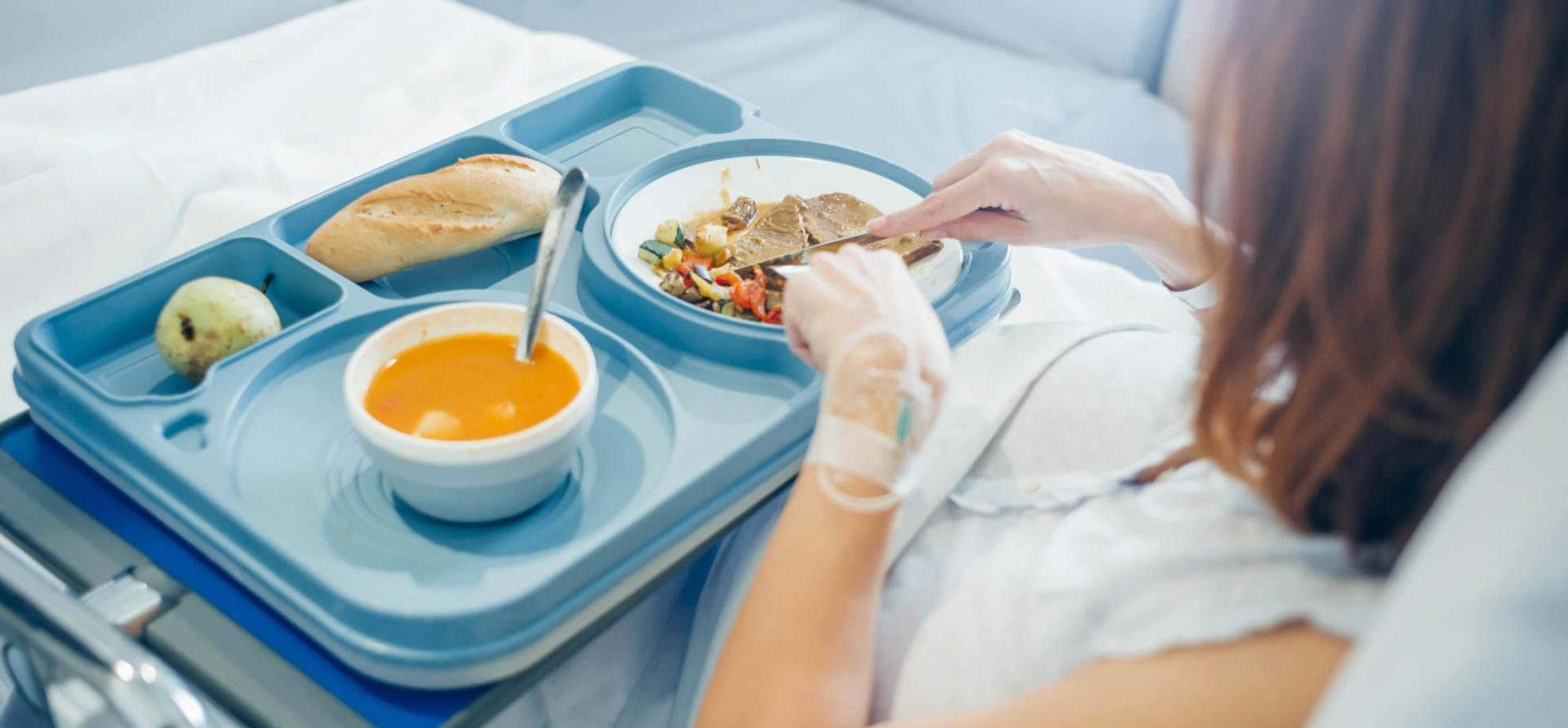
Malnutrition in patients leads to health problems and high costs. Hospitals are tackling the problem with AI-powered surveillance cameras and specially formulated food.

In Switzerland, between 20% and 40% of patients are already malnourished when they enter hospital, and their nutritional status often worsens during their stay. This has a significant effect on the healing process and length of stay, and leads to substantial additional costs. A study by the Swiss Federal Food Safety and Veterinary Office concluded that the average length of stay for malnourished patients is 4.9 days longer than for normally nourished patients, resulting in additional costs of over CHF 500 million annually for the Swiss healthcare system.


Partner with bartday.com. Kindly head here.


From our partners:

CITI.IO :: Business. Institutions. Society. Global Political Economy.
CYBERPOGO.COM :: For the Arts, Sciences, and Technology.
DADAHACKS.COM :: Parenting For The Rest Of Us.
ZEDISTA.COM :: Entertainment. Sports. Culture. Escape.
TAKUMAKU.COM :: For The Hearth And Home.
ASTER.CLOUD :: From The Cloud And Beyond.
LIWAIWAI.COM :: Intelligence, Inside and Outside.
GLOBALCLOUDPLATFORMS.COM :: For The World's Computing Needs.
FIREGULAMAN.COM :: For The Fire In The Belly Of The Coder.
ASTERCASTER.COM :: Supra Astra. Beyond The Stars.
BARTDAY.COM :: Prosperity For Everyone.


3D camera calculates food intake

Nursing homes and hospitals typically keep food records when malnutrition is suspected, but these are often inaccurate and imprecise. This is where the start-up ALPINA+SANA, founded by graduates of the University of St. Gallen and ETH Zurich, comes in. A specially developed AI-powered tracker determines within a fraction of a second whether the patient has eaten enough, enabling early detection of malnutrition. The tracker is a simple high-tech subtraction: a 3D camera records the patient’s meal as it leaves the kitchen, uses laser beams to calculate the volume and 30,000 reference images to identify the type of food and determine the nutritional value. After the meal, the tray and plate are scanned by an identical camera, and the difference in volume is used to calculate the patient’s food intake.

Using protein ice cream to prevent malnutrition

If the tracker detects that a patient has not eaten enough, the shortfall can be addressed with targeted nutritional interventions. The start-up is also developing specialised nutritional supplements alongside the tracker. These are designed to address deficiencies in protein, carbohydrates, vitamins, and minerals. The unique feature of these fully balanced products is that they contain all the micro- and macronutrients needed to substitute a normal diet. The first finished product, a protein ice cream, is already being used in more than 20 hospitals, according to its creators. Other forms, such as liquid meals, soups and baked goods, will be introduced in the future.

Originally published at: Swisstech

Source: zedreviews.com

BartDay

Related Topics
  • Artificial Intelligence
  • Healthcare
  • Medicine
  • Medtech
  • Switzerland
You May Also Like
Red Hat OpenShift
Read More
  • 2 min
  • Technology

Red Hat Further Drives Digital Sovereignty for the AI Era with Red Hat OpenShift on Google Cloud Dedicated

  • April 21, 2026
Illustration of data storage
Read More
  • 5 min
  • Business
  • Featured
  • Technology

The Splinternet Comes for European Supply Chains Why Fragmentation Is Now a Boardroom Problem

  • April 20, 2026
Read More
  • 4 min
  • Technology

Here’s how to get the $7 trillion AI hardware buildout right

  • April 18, 2026
totus-technologies-cover
Read More
  • 5 min
  • Business
  • Featured
  • News
  • Technology

The Transatlantic Tech Rift and Why Data Sovereignty Is the New Industrial Imperative

  • April 15, 2026
Read More
  • 3 min
  • Technology

Hon Hai Technology Group (Foxconn) Recognized As Top 100 Global Innovators 2026

  • April 9, 2026
Read More
  • 4 min
  • Business
  • Technology

IBM Completes Acquisition of Confluent, Making Real Time Data the Engine of Enterprise AI and Agents

  • March 17, 2026
Read More
  • 3 min
  • Technology

Kioxia Announces New SSD Model Optimized for AI GPU-Initiated Workloads

  • March 17, 2026
Read More
  • 4 min
  • Technology

Anthropic invests $100 million into the Claude Partner Network

  • March 12, 2026
  • Red Hat OpenShift
    Red Hat Further Drives Digital Sovereignty for the AI Era with Red Hat OpenShift on Google Cloud Dedicated
    • April 21, 2026
  • Illustration of data storage
    The Splinternet Comes for European Supply Chains Why Fragmentation Is Now a Boardroom Problem
    • April 20, 2026
  • Here’s how to get the $7 trillion AI hardware buildout right
    • April 18, 2026
  • totus-technologies-cover
    The Transatlantic Tech Rift and Why Data Sovereignty Is the New Industrial Imperative
    • April 15, 2026
  • Hon Hai Technology Group (Foxconn) Recognized As Top 100 Global Innovators 2026
    • April 9, 2026
about
Unleash Your Financial Potential With Us

BartDay is your all-in source of information for market insights, finance news, investing, trading, and more.

Data and information is provided “as is”. BartDay and any of its information service providers or third party sources is not liable for loss of revenues or profits and damages.

For comments, suggestions, or sponsorships, you may reach us at [email protected]
  • Red Hat OpenShift 1
    Red Hat Further Drives Digital Sovereignty for the AI Era with Red Hat OpenShift on Google Cloud Dedicated
    • April 21, 2026
  • Illustration of data storage 2
    The Splinternet Comes for European Supply Chains Why Fragmentation Is Now a Boardroom Problem
    • April 20, 2026
  • 3
    Here’s how to get the $7 trillion AI hardware buildout right
    • April 18, 2026
  • totus-technologies-cover 4
    The Transatlantic Tech Rift and Why Data Sovereignty Is the New Industrial Imperative
    • April 15, 2026
  • 5
    Hon Hai Technology Group (Foxconn) Recognized As Top 100 Global Innovators 2026
    • April 9, 2026
BartDay
  • Economy
  • Cryptocurrency
  • Investing
  • Markets
  • People
  • Environment
  • Technology
  • Featured
  • About
Unleash Your Financial Potential With Us

Input your search keywords and press Enter.